
School safety mandates
13 states now require a silent panic alert in schools
Alyssa's Law is a purchase mandate, not a recommendation. Here is which states have passed one, what those statutes have in common, and exactly what pressing the button here does, so you can read it next to your own state's text.
Where it has passed
The pace is the story
One state in 2019, and three more in the eight months before this page was written. Ordered by when each law passed.
2026
Virginia
April 2026
- HB 1125
- HB 1046
- HB 2403
- HB 592
West Virginia
April 2026
- HB 4798
Illinois
August 2026
- HB 5107
2025
Georgia
April 2025
- SB 32
- SB 17
- HB 268
Washington
May 2025
- SB 5004
Oregon
May 2025
- HB 3101
- HB 3083
2024
Utah
May 2024
- HB 0084
Oklahoma
June 2024
- SB 1357
- HB 4073
2023
Texas
May 2023
- HB 204
- HB 669
- SB 838
Tennessee
May 2023
- HB 0322
- HB 2528
2022
New York
June 2022
- SB 7132A
2020
Florida
June 2020
2019
New Jersey
February 2019
Filed and not yet passed
- Alabama
- Arizona
- Arkansas
- Connecticut
- Kentucky
- Maine
- Massachusetts
- Michigan
- Mississippi
- Missouri
- Nebraska
- Ohio
- Pennsylvania
- South Carolina
No bill numbers and no predicted dates for these. A pending bill is renumbered as it is amended and its calendar belongs to the legislature, so anything printed here would be wrong before it was useful.
Both lists were read from Make Our Schools Safe on 2026-08-18. The Alhadeff family's campaign, which tracks these bills and lobbies for them. That page stays the authority; this one is a summary of it with a date against it.
What the statutes ask for
Four things they have in common
The thirteen differ in their details. These four turn up in most of them, phrased as the thing a district has to be able to demonstrate.
Silent
No siren and no announcement in the room. An alarm that tells the building it has been pressed also tells whoever is in the corridor.
Reaches law enforcement
The alert leaves the building. Notifying staff is not the requirement; most of these statutes are written because notifying staff was already happening and was not enough.
Carries where
A responder needs the building, and increasingly the room. An alert that arrives without a location has moved the problem rather than solved it.
Reachable from anywhere on site
Not a button behind the front desk. The statutes that specify this at all specify that staff can raise it from where they are standing.
What the button does
Every verb, in order
Read this against your own state's text rather than against a compliance badge. Each line is something you could go and verify in an incident timeline afterwards.
- 01
Anybody signed in may press it
There is no role check on raising a panic, by decision. Standing one down is restricted, because that reaches out and cancels a real response.
- 02
It opens a critical incident immediately
No review queue, no countdown, no confidence band to clear. A person decided to press it, so there is nothing to triage.
- 03
Dispatch is requested in the same act
Routing to law enforcement with location data is part of the activation rather than a second decision somebody has to remember to make under pressure.
- 04
Everybody on the roster is told
The duty rota is ignored for this one. Whoever is off shift is told anyway, on email and SMS, and a banner appears on every console in the organization.
- 05
Whatever was typed about where leads the entry instructions
A note in somebody's own words goes to the dispatcher ahead of anything the system knows, quoted rather than restated.
- 06
Nothing sounds and nothing is announced
There is no siren and no public-address announcement unless a person separately chooses one from the response ladder.
What we will not tell you
Whether a particular deployment satisfies a particular state's statute is a determination for the district and its counsel, against that state's own text. The statutes differ on where an alert must be reachable from, on whether it may reach a 911 centre through a monitoring agent or must arrive directly, and on whether wearable devices count. No vendor can answer that for you, and one that says otherwise is answering a question nobody asked them.
Why they belong together
One set of rails, not two
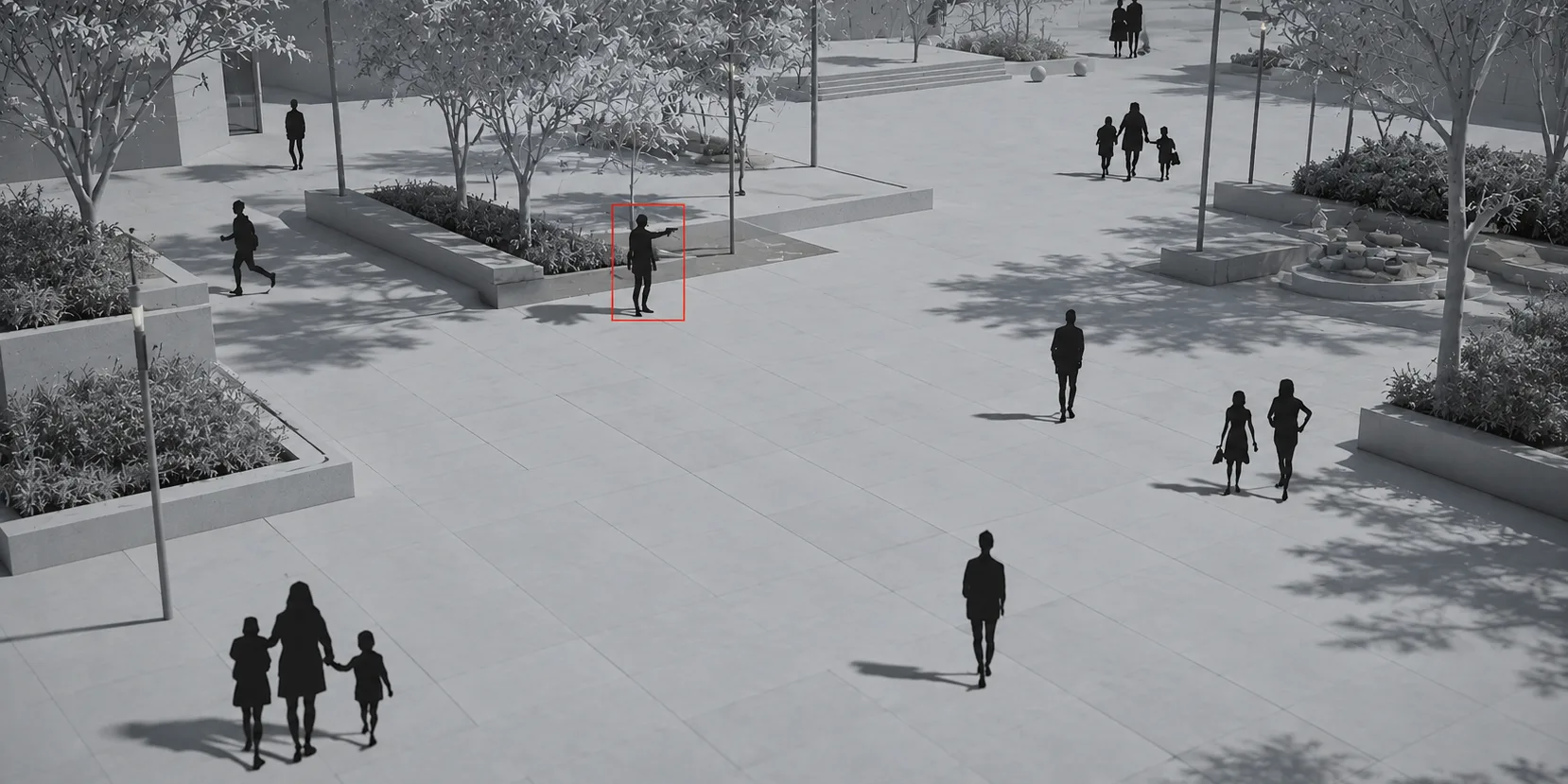
Panic and detection ride the same escalation here: the same roster, the same response ladder, the same dispatch path, the same incident timeline. A district buying a mandated panic system is buying most of a detection deployment either way, and paying two vendors to build the same rails twice is the usual way that budget gets spent.
Before you shortlist
Questions worth asking every vendor on your list
Including us. The evaluation checklist goes further and is written to be used against a field of vendors rather than to flatter one.
Ask about your state
Tell us the district and the statute you are working to, and you will get a straight answer about what this does and does not do against it, including where the answer is that you need something else.
Contact